Inspection models trained on your parts
Turn labelled examples of good and bad output into a classification or detection model, then score it against a held-out test set before it reaches the line.
- Confusion matrix per run
- Model testing across versions
- Dataset health checks
What this solves
Hand-written inspection rules break the moment the product changes. A trained model adapts as you add examples, but only if you can measure whether the new one is actually better than the model it replaces.
Who this is for
- Quality engineers
- Process and production engineers
- ML engineers
Why edge inference fits
Decisions happen locally
Inference runs on the device itself. There is no round trip to a server between a frame and a result.
Keeps working offline
A deployed model runs without a connection. Devices send heartbeats and inference logs when they reconnect.
Data stays where it is captured
Frames are processed on the device. Nothing has to leave the site for a prediction to be made.
The whole pipeline, one stage at a time
Every stage below is a screen in the platform, not a diagram of something you still have to build.
0110
01Stage 1 of 10
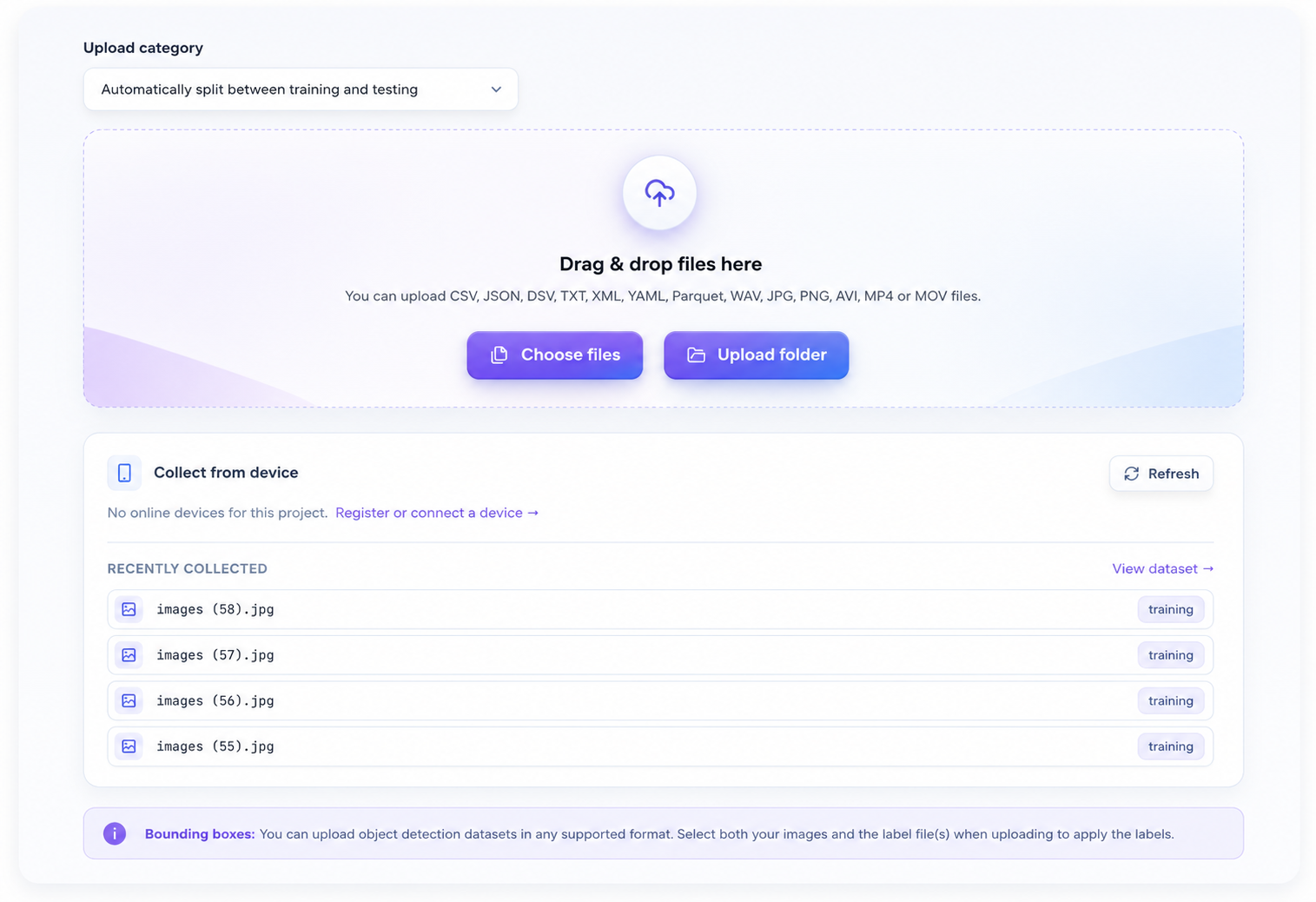
Collect data
Upload samples or import an existing folder tree.
Data
What you get in the platform
Dataset upload and import
Upload samples, import a folder tree, or map columns with the CSV wizard.
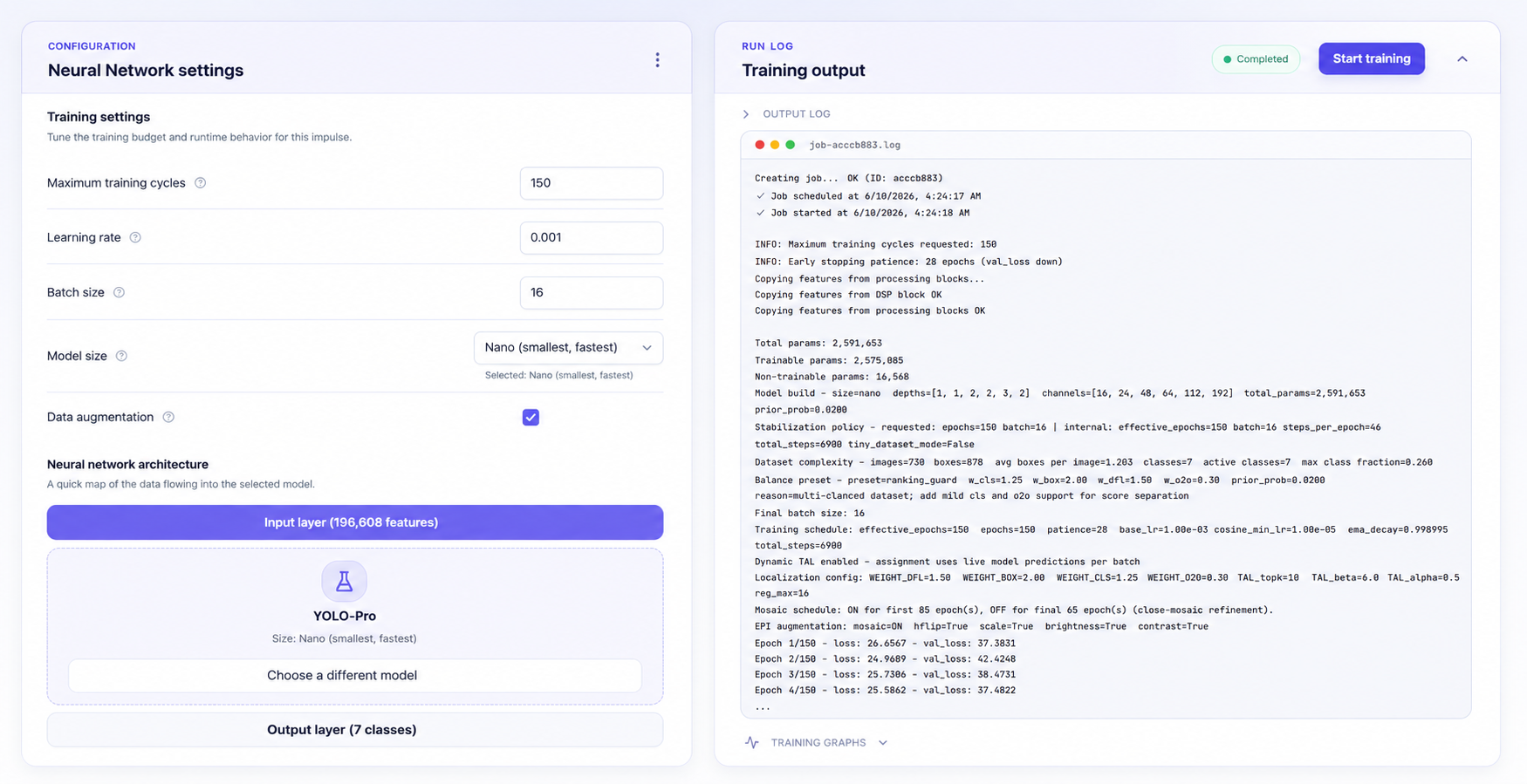
Training with live job logs
Watch a training job as it runs, cancel it, or retrain from an existing impulse.
Image classification
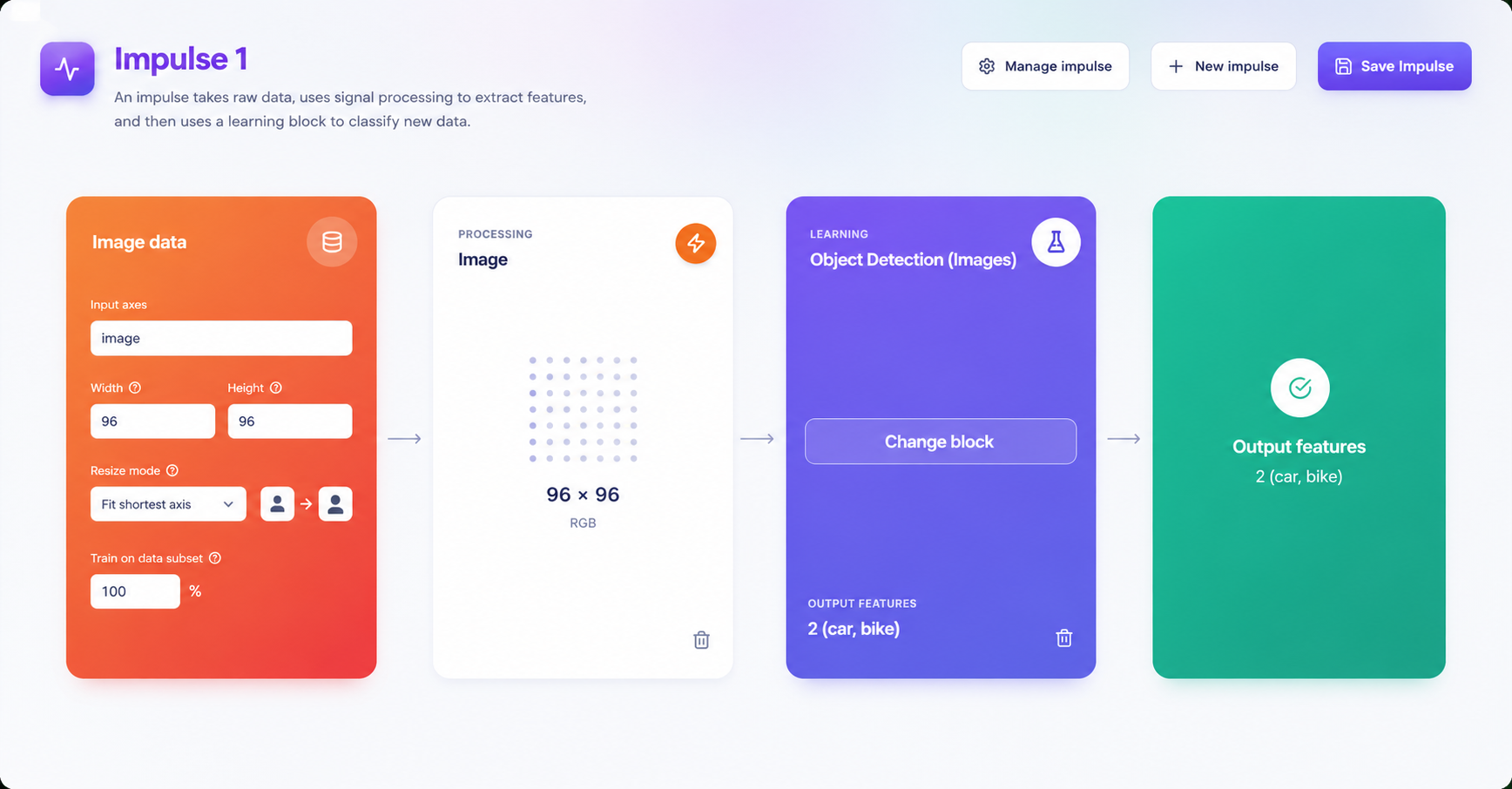
Train MobileNetV2 from scratch or fine-tune with ImageNet transfer learning.
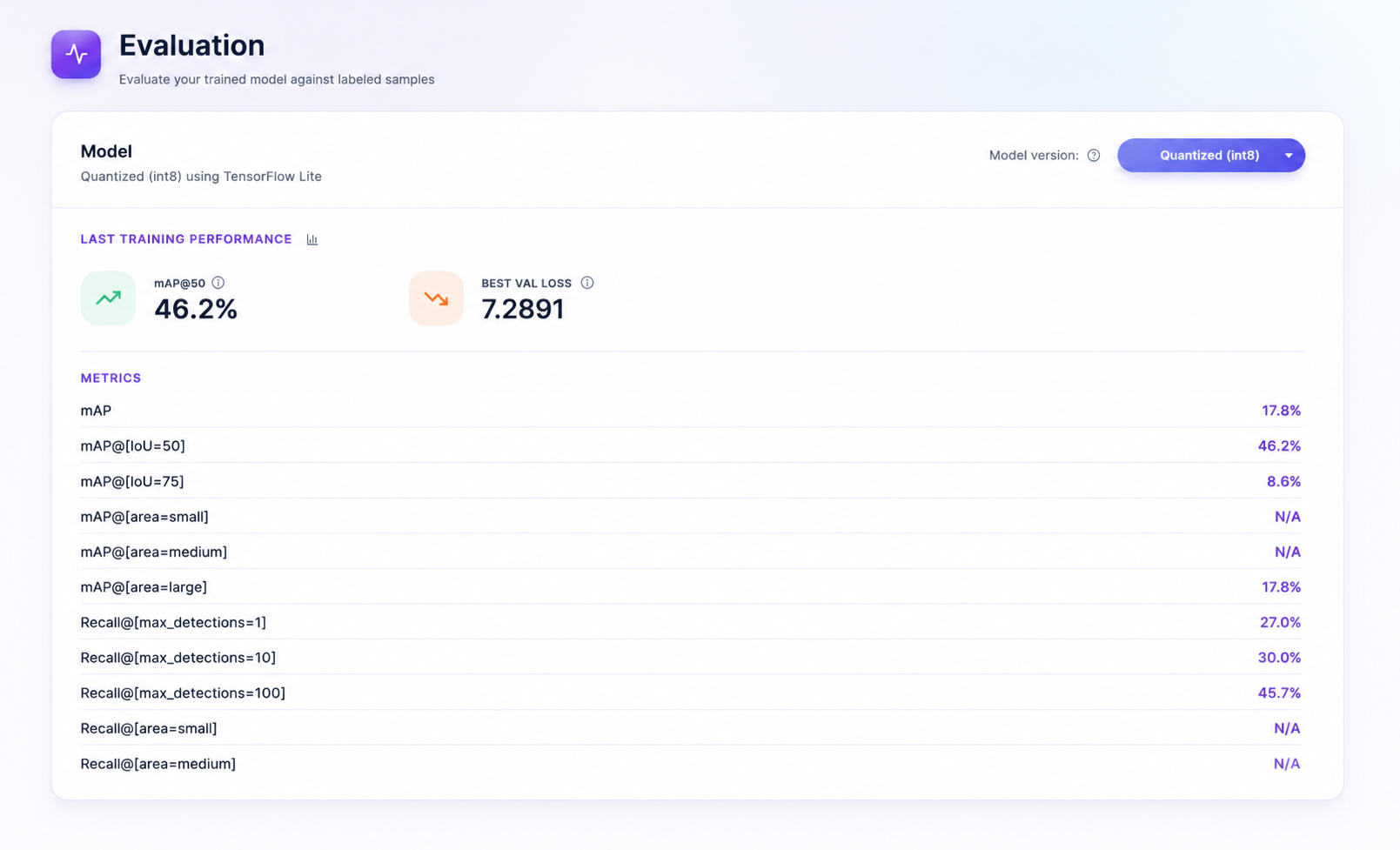
Evaluation you can read
Confusion matrix and per-class metrics for every completed training job.
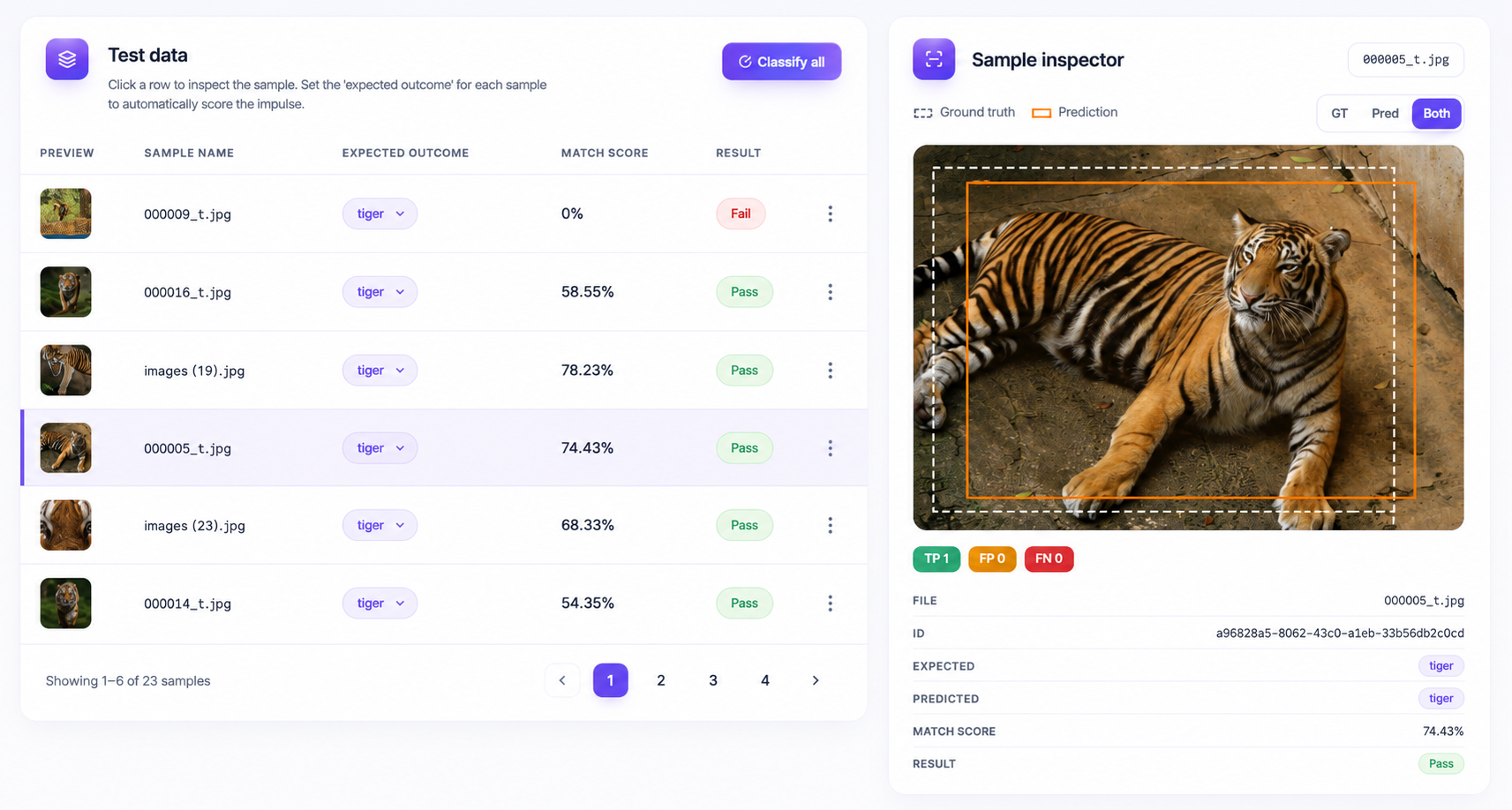
Model testing across versions
Run the test set through any model version and compare the results side by side.
Dataset health checks
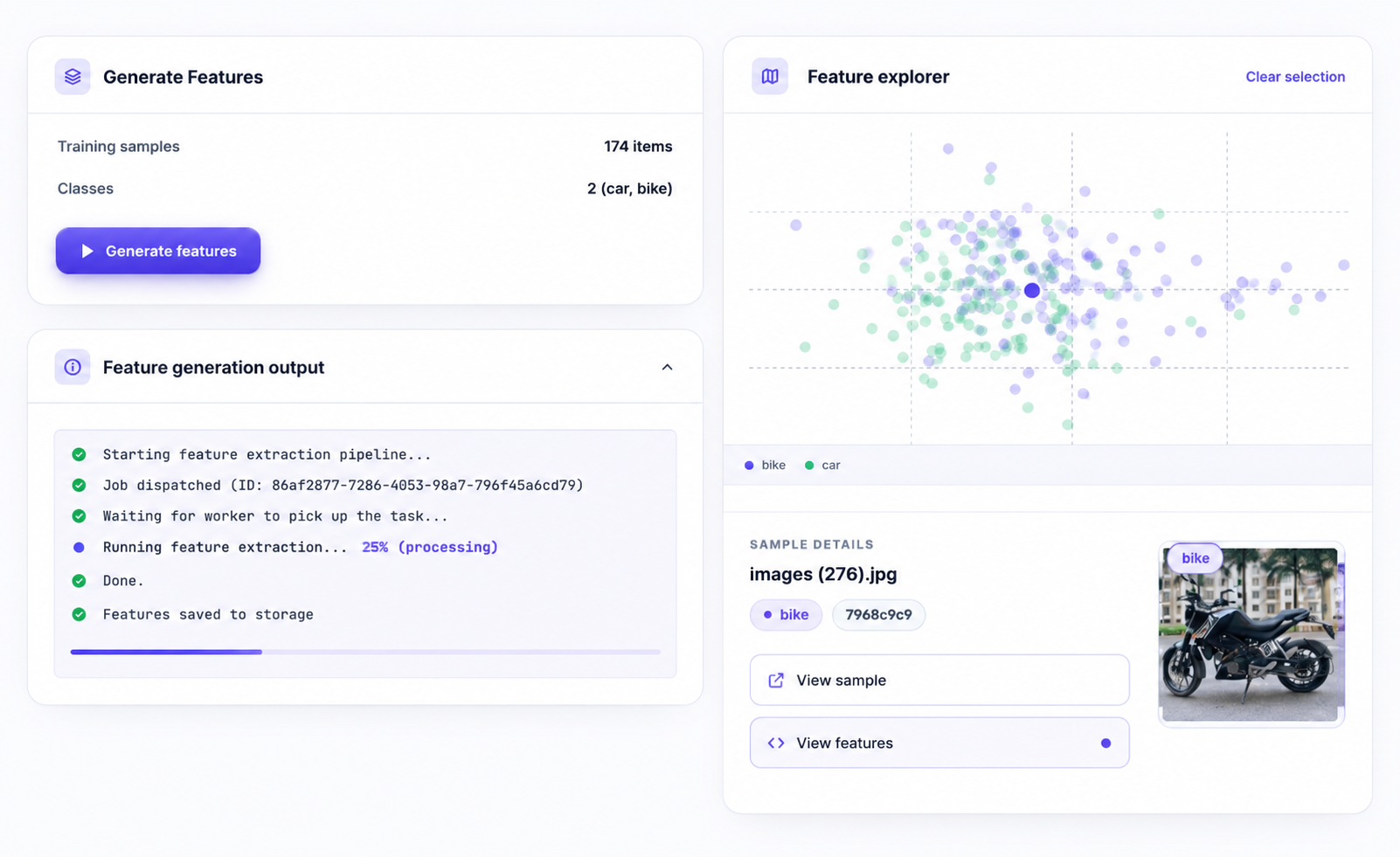
See class imbalance and dataset problems before you spend a training run on them.
What teams build with it
Pass/fail surface check
Classify a captured surface as acceptable or not.
Defect-type classification
Sort defects into the classes you already track.
Component presence check
Detect whether every expected component is in place.
Label and print verification
Check that the right label is applied and readable.
Locating the defect, not just flagging it
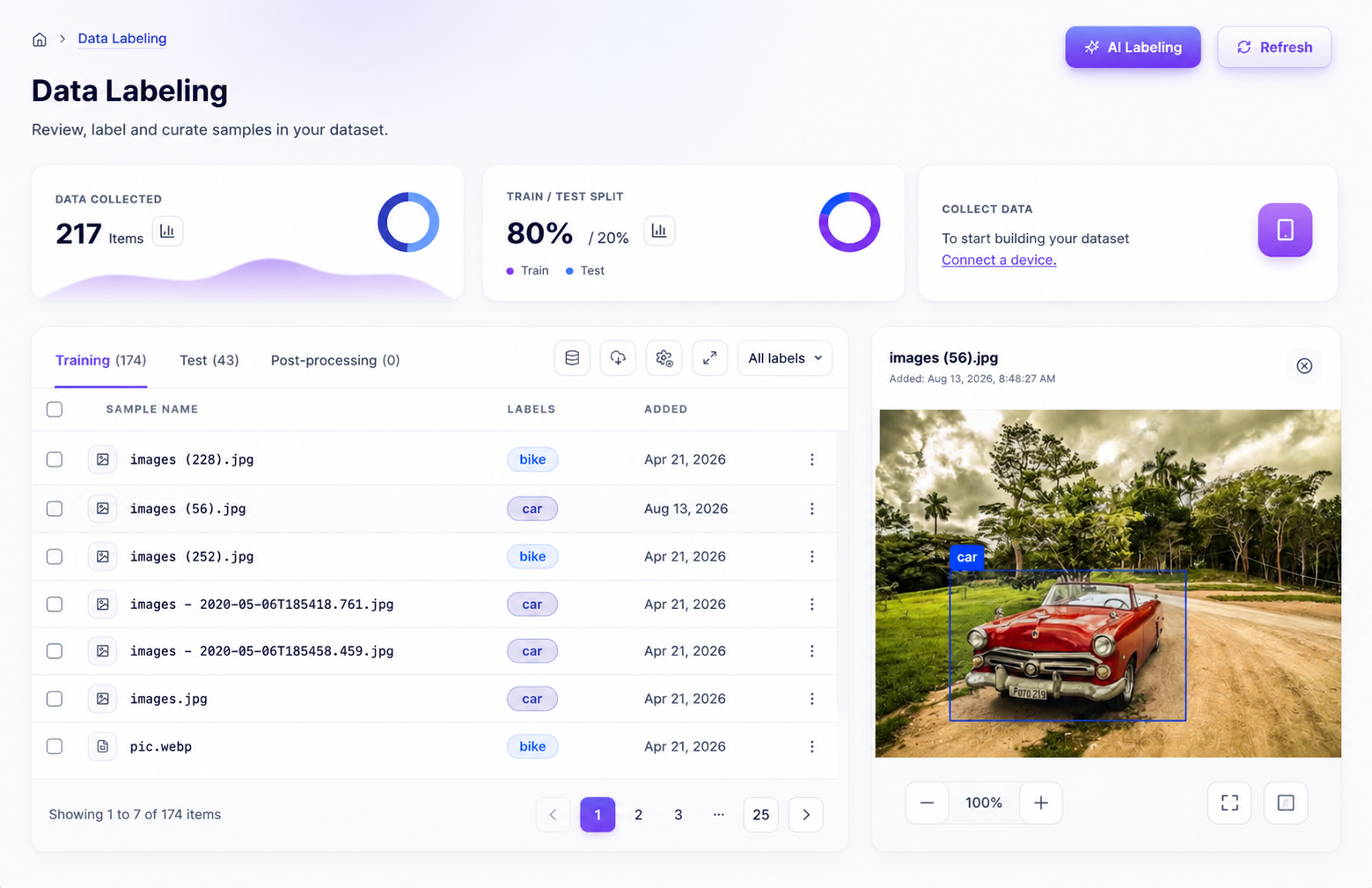
Return a box around what failed so an operator can see why.
Where this runs
The targets teams reach for on this kind of project.
Raspberry Pi
Python inference package
Installs with the device client and runs as a service
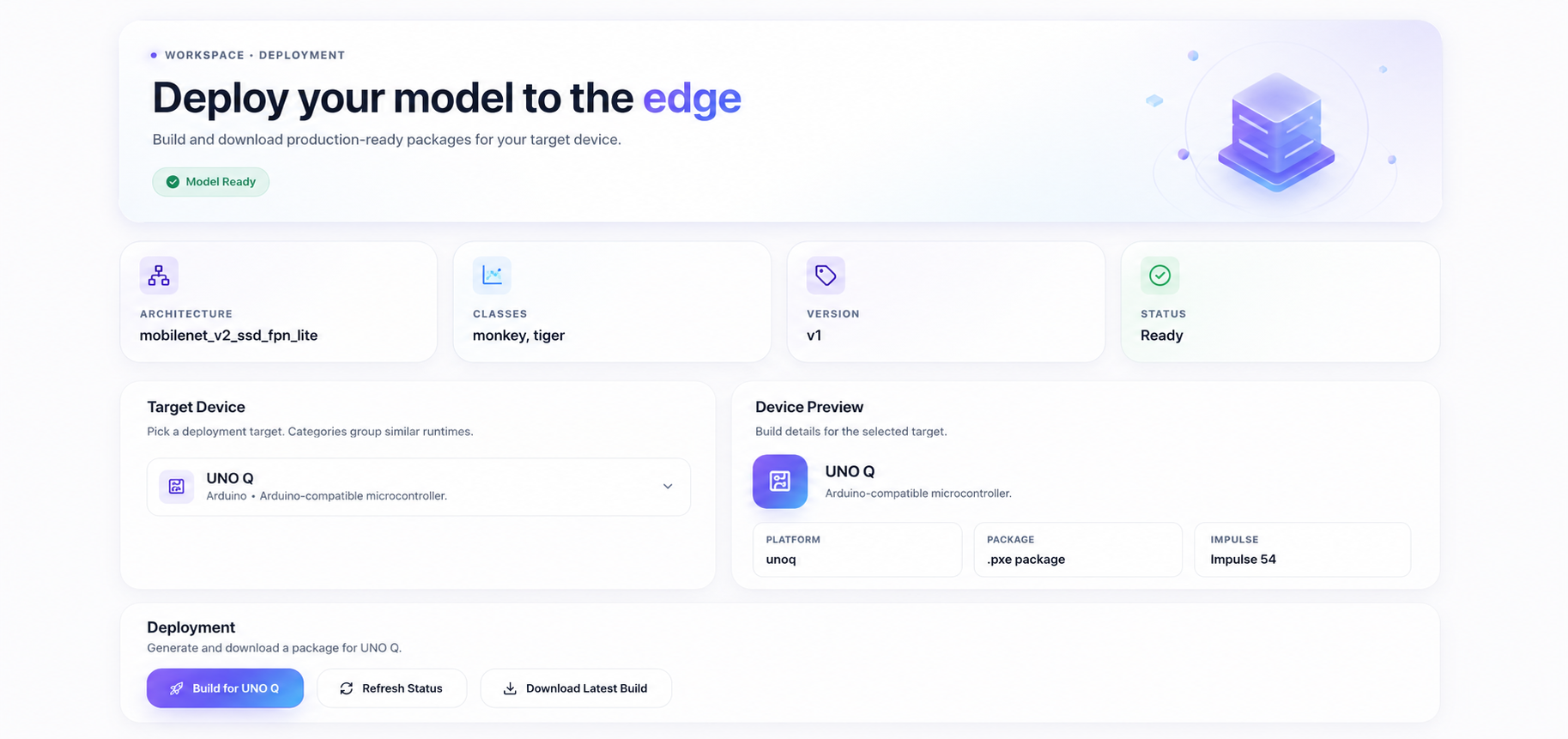
UNO Q
Linux runtime package
The on-device runner takes it from there, no glue code to write
TensorFlow Lite
TensorFlow Lite model with an inference library
Embed it in any runtime that can load TensorFlow Lite
Petal Edge builds for six targets in total, each with its own package format and constraints.
See all deployment optionsOne platform, start to finish
Data, labels, training, evaluation, post-processing, deployment and the fleet live in one place, with nothing to stitch together.
The whole lifecycle
Collect, label, train, evaluate, post-process, deploy and monitor without leaving the platform.
Models sized for edge hardware
NanoVision, Vision Pro and MobileNetV2 are built to run on devices, not on datacentre GPUs.
Six deployment targets
One trained model, packaged for the hardware you already run.
A fleet you can reach
Register devices, read their inference logs, and push new models over the air.
What’s included
- Dataset import from COCO, YOLO, Pascal VOC, Open Images and Edge Impulse JSON
- AI-assisted labeling with human review before anything is applied
- Confusion matrix, per-class metrics and model testing across versions
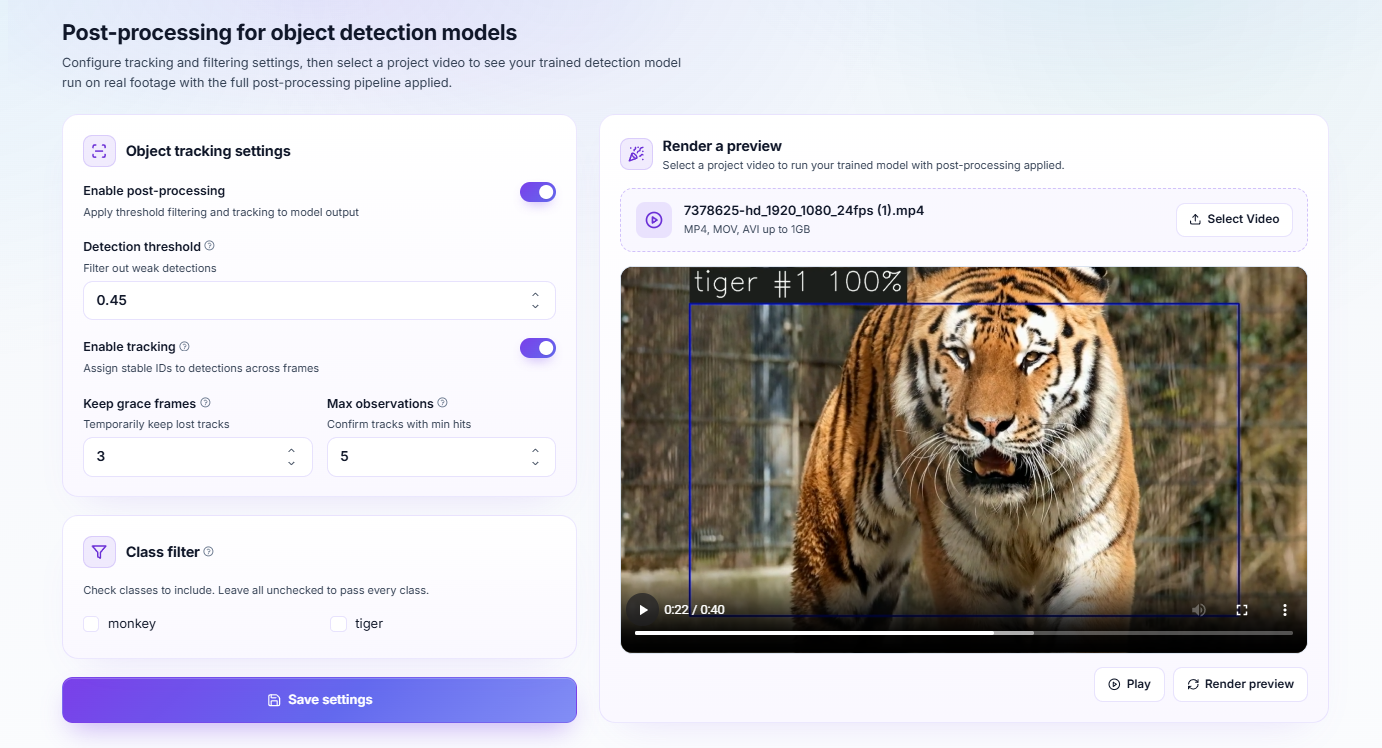
- Post-processing with NMS and IoU tracking
- Over-the-air model updates to registered devices
- Project export, so your data and models stay portable
Train an inspection model on your data
Create a project, bring your data, and take it through to a deployed model.